loading


Product
Water Refill Bottled Water Vending Machine | Dual-Cabinet Concept
A fresh aquatic identity, paired bottle displays and an operator-focused ownership plan.
Water Refill Bottled Water Vending Machine | Dual-Cabinet Concept
A fresh aquatic identity, paired bottle displays and an operator-focused ownership plan.

Water Refill Bottled Water Vending Machine | Dual-Cabinet Concept

A fresh aquatic identity, paired bottle displays and an operator-focused ownership plan.

WEIMI / WATER REFILL COLLECTION

Water Refill Bottled Water Vending Machine

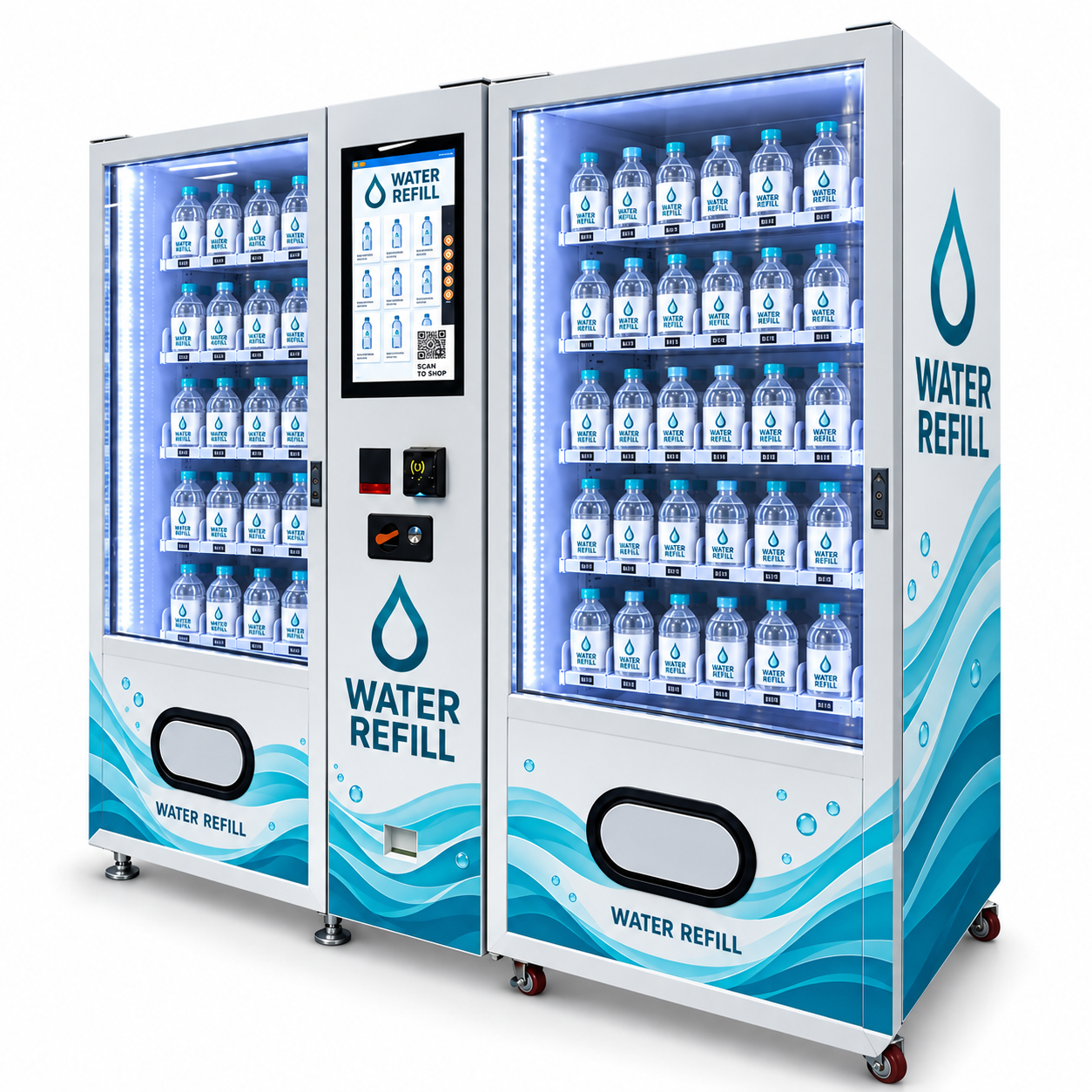
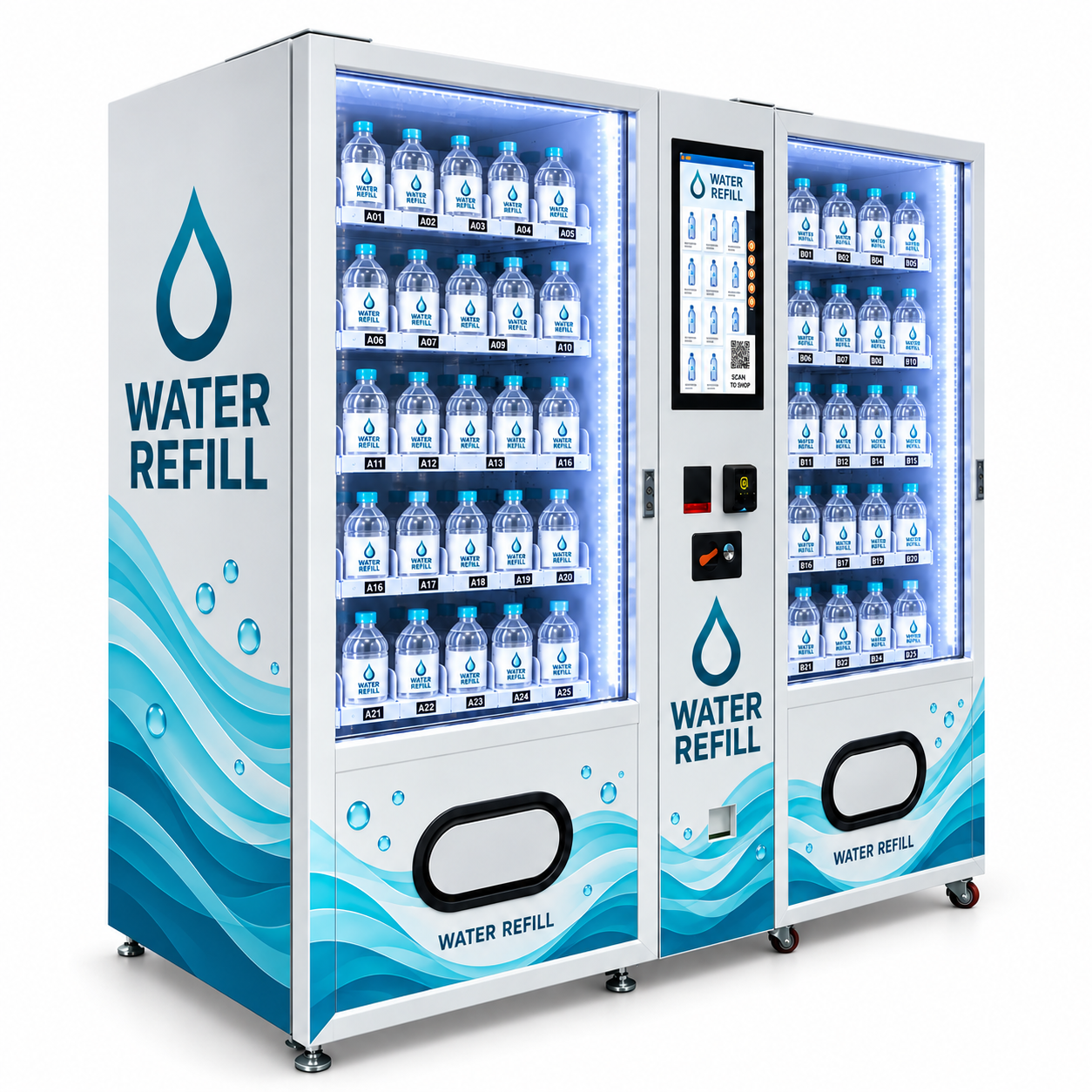
Create a distinctive self-service retail point for approved sealed bottled water. The paired-cabinet concept combines illuminated merchandise windows, a central portrait selection area and a pearl-white wrap with layered cyan waves and a large water-drop identity.

Category visibility

A clear water identity and two visible product windows support an organised beverage presentation.

Practical operation

Plan approved bottle fit, replenishment, stock rotation and customer support around the chosen venue.

A complete investment case

Compare retained demand with landed product cost, payment charges, route effort and location expenses.

Buyer support scope

Agree configuration, acceptance, training, warranty and lifecycle parts arrangements in the purchase proposal.

The Water Refill wording is the reference design theme. The images show bottled-water merchandise; filtration, bulk-water refilling, refrigeration, rated capacity and specific payment services require separate confirmation for the ordered configuration.

Request your water retail configuration →

5.0
design customization

    oops...!

    no product data.

    Go to homepage
    WEIMI / WATER REFILL COLLECTIONPlan your water retail point →

    BOTTLED WATER. EVERYDAY OPPORTUNITY.

    Bottled water.
    Within reach.

    Water Refill Bottled Water Vending Machine — a paired-cabinet retail concept with a clear aquatic identity and a practical plan for daily operation.

    Explore the machine →Build the location case →

    Sealed bottle retailDual-display conceptBuyer-first planning
    Right perspective of the Water Refill bottled-water vending concept, showing two illuminated merchandise cabinets, a central portrait screen and cyan wave artwork.
    Right-side perspective / Water Refill concept reference

    THE WATERLINE DESIGN LANGUAGE

    Pearl white. Cyan currents. A deep-blue anchor.

    The wrap combines an oversized water-drop symbol, layered blue waves and clear Water Refill typography. The page follows that visual rhythm with rounded surfaces, fluid spacing and clean information.

    PEARL WHITE

    A bright field for the product and the interface.

    CYAN CURRENT

    Flowing wave bands and a fresh category signal.

    WATERLINE TEAL

    Clear navigation, boundaries and operating highlights.

    DEEP-BLUE ANCHOR

    Readable titles, the droplet mark and the business case.

    CHOOSE THE SETTING

    Find the right place in the daily flow.

    Open a venue profile to connect customer demand with the operating plan. These are candidate settings, subject to site permission and equipment suitability.

    VENUE PROFILE / 01Workplaces

    A repeat audience with a predictable daily rhythm.

    Place the offer near a permitted break area or circulation route. A simple approved water range can complement existing refreshment service.

    WHAT TO MEASURE

    Track shifts, peak breaks and the share of sales that are incremental to the current offer.

    Access hoursRepeat demandRefill route

    Open the related plan →
    VENUE PROFILE / 02Fitness and sports venues

    Match the location to a clear refreshment occasion.

    A permitted entrance, spectator area or shared circulation point may offer convenient access to sealed bottled water.

    WHAT TO MEASURE

    Review existing beverage agreements, event patterns and the real customer price expectation.

    Peak sessionsVenue policiesPackage fit

    Open the related plan →
    VENUE PROFILE / 03Residential properties

    Make a common-area offer practical for residents.

    A suitable lobby or amenity area can put a small water range closer to residents when the building permits retail activity.

    WHAT TO MEASURE

    Test demand before carrying a large assortment and agree help responsibility with the property manager.

    PermissionsLocal demandHost support

    Open the related plan →
    VENUE PROFILE / 04Hotels and visitor spaces

    Support visitors with a clear, nearby purchase point.

    A permitted visitor area can complement staffed service, particularly where guests benefit from an easy bottled-water purchase.

    WHAT TO MEASURE

    Agree retail access, language needs, site-host escalation and any existing supply arrangements.

    Guest accessClear pricesHelp route

    Open the related plan →
    VENUE PROFILE / 05Campuses and shared facilities

    Use activity patterns to shape the operating plan.

    A permitted common area may bring several visitor groups together. Plan the offer around the actual opening calendar and approved products.

    WHAT TO MEASURE

    Account for holidays, examination periods, scheduled closures and any venue nutrition policies.

    CalendarAudience mixStock rotation

    Open the related plan →
    VENUE PROFILE / 06Retail satellites

    Extend a known offer into a new approved point.

    An existing retailer can test bottled-water sales in a complementary location while sharing supply and replenishment processes where practical.

    WHAT TO MEASURE

    Measure contribution after route costs and any displacement from a nearby staffed counter.

    Supply routeNew purchasesContribution

    Open the related plan →

    01 / THE OPERATOR OPPORTUNITY

    A familiar purchase. A useful retail presence.

    Turn everyday bottled-water demand into a site-specific business case.

    01 / DEMAND

    Meet an immediate need

    A focused water offer can serve people who want a sealed drink close to the moment of purchase. A clearly positioned machine shortens the search for that everyday item.

    PURCHASE CHECKPOINT

    Observe purchases by time of day, then compare retained sales with the cost of keeping this particular site supplied.

    02 / ACCESS

    Extend the retail footprint

    A self-service location can complement a shop, reception or venue counter without requiring a dedicated staffed water counter for every transaction.

    PURCHASE CHECKPOINT

    Include refill, cleaning and customer support time when comparing operating formats.

    03 / VISIBILITY

    Make the category unmistakable

    Water-drop graphics, white panels and flowing cyan bands communicate a simple beverage identity. The large side artwork helps the concept remain legible from an approach angle.

    PURCHASE CHECKPOINT

    Approve the final artwork, logo rights and panel layout before production.

    04 / GROWTH

    Scale from evidence

    Begin with one documented operating plan, then use sales, service effort and contribution to decide whether the next location deserves investment.

    PURCHASE CHECKPOINT

    Set a review date and an improve, relocate or expand decision before buying additional equipment.

    02 / THE MACHINE ARCHITECTURE

    Two cabinets. One visual destination.

    A paired display concept with a central selection area and an aquatic identity.

    01 / DISPLAY

    Paired product windows

    The supplied references show bottles arranged behind two illuminated front windows. This gives the concept a broad merchandise presence and an immediately visible product category.

    PURCHASE CHECKPOINT

    Confirm the cabinet dimensions, internal layout and actual delivered display arrangement.

    02 / INTERFACE

    Central portrait interface

    A tall screen occupies the middle console. A central selection area can give buyers a single starting point while the surrounding displays keep the merchandise in view.

    PURCHASE CHECKPOINT

    Demonstrate the supplied menu, languages and navigation on the final equipment.

    03 / COLLECTION

    Distinct lower collection panels

    Each display cabinet has a large rounded lower panel in the artwork. Their placement offers clear visual locations to explain the final collection procedure.

    PURCHASE CHECKPOINT

    Ask for a full delivery demonstration; the images do not identify the release mechanism or panel operation.

    04 / FOOTPRINT

    A complete installation envelope

    The paired concept needs an access plan that includes the full assembly, replenishment access and working space. A careful site survey protects the installation budget.

    PURCHASE CHECKPOINT

    Request final weight, dimensions, electrical requirements and anchoring or levelling instructions.

    03 / THE BOTTLE MATCH

    Let the actual bottle define the configuration.

    Approve the sealed package, the loading plan and the complete collection route.

    01 / GEOMETRY

    Diameter and height

    A suitable bottle envelope makes loading repeatable and helps prevent avoidable jams. Measure the actual product with its cap and label rather than relying on nominal volume.

    PURCHASE CHECKPOINT

    Submit physical samples and the manufacturer dimensional drawing where available.

    02 / WEIGHT

    Filled weight and balance

    Filled bottles can behave differently from empty samples. A representative vending trial helps reveal how the package travels and how its weight affects handling.

    PURCHASE CHECKPOINT

    Use sealed, filled samples at the agreed minimum and maximum package sizes.

    03 / VALIDATION

    Full journey testing

    Compatibility includes release, transfer, arrival and comfortable retrieval. Inspect the delivered bottle for leakage, damage and label abrasion after each agreed trial.

    PURCHASE CHECKPOINT

    Agree a sample plan, test conditions and acceptance criteria before the equipment order.

    04 / CHANGE CONTROL

    Assortment changes

    A new water supplier or bottle redesign can change package fit. A controlled approval step protects availability when the commercial range evolves.

    PURCHASE CHECKPOINT

    Retest changed diameter, cap, material or filled weight before replacing the approved SKU.

    04 / THE PURCHASE EXPERIENCE

    A clear journey from selection to collection.

    Help the operator protect successful transactions and give customers a practical help route.

    01 / SELECTION

    Readable product selection

    An organised menu can make volume, product name and price easy to compare. Consistency between the screen and physical stock supports confident selection.

    PURCHASE CHECKPOINT

    Specify languages, item images, accessibility needs and the exact menu functions offered.

    02 / PAYMENTS

    Destination-ready payments

    The right payment configuration makes a low-value water purchase more convenient for the intended audience. Local methods and transaction charges both affect adoption.

    PURCHASE CHECKPOINT

    Confirm merchant onboarding, provider availability and recurring fees before choosing the payment package.

    03 / HANDOVER

    Clear collection instructions

    A short, accurate collection prompt can reduce hesitation after payment. The instructions should describe the actual supplied hardware and collection location.

    PURCHASE CHECKPOINT

    Use the accepted machine demonstration to approve the final customer instructions.

    04 / CUSTOMER CARE

    Exception ownership

    A named support route gives the customer a place to report an incomplete sale or a product concern. Defined ownership also helps the site host respond consistently.

    PURCHASE CHECKPOINT

    Agree the investigation, refund and customer communication process with the operator and provider.

    05 / STORAGE AND PERFORMANCE

    Protect the bottle. Budget for the real conditions.

    Match the water label, desired service temperature and installation environment.

    01 / PRODUCT CARE

    Manufacturer storage instructions

    The actual bottled-water label and supplier guidance define suitable storage. Product protection is easier when stock handling and site conditions follow a documented routine.

    PURCHASE CHECKPOINT

    Review ambient conditions, sunlight exposure and any manufacturer limits for the stocked SKU.

    02 / COOLING CHOICE

    Optional chilled positioning

    A verified refrigerated package may support a chilled-water offer where the customer use case justifies its cost. The images alone do not establish refrigeration.

    PURCHASE CHECKPOINT

    Obtain the selected cooling specification, ambient operating limits and an acceptance demonstration.

    03 / READINESS

    Ventilation and power

    A correct electrical and ventilation plan helps the equipment work within its specified conditions. It also avoids paying for a location that cannot support the selected setup.

    PURCHASE CHECKPOINT

    Confirm supply, protective devices, ventilation clearances and technician access in the site survey.

    04 / EFFICIENCY

    Measured operating cost

    Representative energy and connectivity data make the monthly budget more useful. Match the figures to the ordered equipment and anticipated operating conditions.

    PURCHASE CHECKPOINT

    Ask for the measurement basis and include actual tariffs rather than treating lighting as proof of efficiency.

    06 / THE OPERATING LOOP

    Keep the supply loop simple and visible.

    Plan replenishment around retained demand, stock rotation and the cost of each visit.

    01 / ALLOCATION

    Demand-based allocation

    Give faster-selling approved SKUs enough space while retaining a manageable range. A simple core assortment can make both customer choice and replenishment easier.

    PURCHASE CHECKPOINT

    Use actual units sold and out-of-stock observations to revise the loading plan.

    02 / SCHEDULING

    A practical visit cadence

    A planned refill rhythm balances availability with travel and labour. The right interval depends on demand, approved capacity and access to the installation.

    PURCHASE CHECKPOINT

    Record visit time, travel, parking and venue access restrictions in the route cost.

    03 / ROTATION

    Traceable stock rotation

    A consistent rotation routine keeps older suitable stock visible to the operator and supports batch traceability. Date discipline helps protect working capital.

    PURCHASE CHECKPOINT

    Follow product guidance and use the appropriate first-expiring-first-out process.

    04 / PRESENTATION

    Clean display, clear information

    Readable labels, a clean window and an orderly collection area help the aquatic design retain its intended appearance. A concise task list makes this repeatable.

    PURCHASE CHECKPOINT

    Use approved cleaning materials and the supplier procedure around electronics and merchandise.

    07 / THE INVESTMENT LOGIC

    A water sale needs a complete margin story.

    Focus on contribution, cash requirements and evidence from the pilot location.

    01 / MERCHANDISE

    Landed bottle cost

    Purchase cost, inbound handling and relevant logistics form the cost of putting a saleable unit into the machine. Compare suppliers on this complete basis.

    PURCHASE CHECKPOINT

    Use a sales-weighted average when the assortment includes more than one pack or price point.

    02 / PAYMENT COST

    Small-ticket payment economics

    Percentage fees and fixed transaction charges can materially affect a water sale. Reviewing provider terms early helps set an informed retail price.

    PURCHASE CHECKPOINT

    Include minimum charges, subscriptions and settlement costs in the appropriate cost category.

    03 / LOCATION

    A venue agreement that works

    Rent, commission and access arrangements shape the location economics. A clear agreement can align the host benefit with the operator contribution.

    PURCHASE CHECKPOINT

    Specify the sales basis for commission, utility responsibility, access and removal terms.

    04 / FUNDING

    Working capital readiness

    Opening stock and an operating reserve are part of the cash needed to launch. Treating stock as free can make an attractive headline recovery period misleading.

    PURCHASE CHECKPOINT

    Include installed equipment, freight, setup, stock and the relevant project reserve in initial funding.

    08 / BUYER SUPPORT AND HANDOVER

    A support plan that protects the ownership experience.

    Make scope, responsibilities and service access part of the purchase decision.

    01 / COMMISSIONING

    Acceptance before public launch

    A documented handover can demonstrate selection, payment, correct delivery and the condition of the bottle. The buyer can see how the supplied system handles a real sale.

    PURCHASE CHECKPOINT

    List open items, retest steps and the agreed acceptance method for the project.

    02 / LAUNCH

    Operator training

    A focused training session can cover replenishment, item mapping, cleaning and customer exceptions. Clear routines help the buyer put the machine into daily operation.

    PURCHASE CHECKPOINT

    Confirm included training, language, format and any installation assistance in the quotation.

    03 / PROTECTION

    Warranty clarity

    Written warranty terms help the buyer understand which equipment issues are covered and how a claim is handled. Clear exclusions support a more complete ownership budget.

    PURCHASE CHECKPOINT

    Request duration, coverage, exclusions, labour, freight and claim responsibilities; no period is assumed here.

    04 / RESOLUTION

    Technical escalation

    Defined support channels and a route to on-site service can make issues easier to resolve. The buyer should know who owns remote checks, parts and technician scheduling.

    PURCHASE CHECKPOINT

    Agree service hours and response targets where offered; confirm them in the final service terms.

    THE WATER RETAIL LEDGER

    See the return through three demand lenses.

    Illustrative USD assumptions only. These figures explain the method; they are not equipment prices, actual water margins or a sales forecast.

    $2.00Net realised price
    $0.65Landed bottle cost
    $0.07Payment fee / 3.5%
    $0.08Loss / support allowance
    $1.20Unit contribution
    $480Monthly fixed costs

    LOWER DEMAND

    300

    retained sales / month

    Net revenue$600
    Variable contribution$360
    After fixed costs-$120
    Simple cash recoveryNo finite recovery
    Read this scenario

    Unit contribution remains positive, but 300 sales do not cover the $480 fixed monthly cost. Review demand and site costs before committing further cash.

    WORKING EXAMPLE

    800

    retained sales / month

    Net revenue$1,600
    Variable contribution$960
    After fixed costs$480
    Simple cash recovery18.3 months
    Read this scenario

    At 800 retained sales, the example produces $480 monthly operating contribution. The illustrative $8,800 initial funding recovers in about 18.3 months if the assumptions remain constant.

    HIGHER DEMAND

    1,500

    retained sales / month

    Net revenue$3,000
    Variable contribution$1,800
    After fixed costs$1,320
    Simple cash recovery6.7 months
    Read this scenario

    At 1,500 retained sales, the example produces $1,320 monthly operating contribution. This level needs real demand, a workable stocking route and suitable equipment capacity.

    Keep the complete cash picture.

    Example initial funding: $8,000 installed equipment plus $800 opening stock, totalling $8,800. Operating break-even is 400 retained sales per month. A 24-month simple recovery target requires at least 706 monthly retained sales under these constant assumptions.

    Monthly operating contribution = retained sales × unit contribution − fixed costs. Simple recovery = initial funding ÷ positive monthly operating contribution. This is not an accounting ROI calculation. Financing, income tax, depreciation, ramp-up, working-capital changes, residual value and discounting are excluded.

    Budget refill labour, travel, rent, power, connectivity, software, insurance and maintenance. Include variable venue commission and fixed transaction charges where applicable. Handle tax, bottle deposits and refunds consistently; avoid subtracting the same loss twice.

    Discuss project costs →Review the operating loop →

    THE FIRST-LOCATION REVIEW

    Turn a launch into a measurable operating decision.

    Use a defined pilot period and a review date. A consistent record is more useful than an optimistic estimate of passing footfall.

    MEASURE 1

    Retained demand

    Completed purchases after returns

    Decision informed: Price, assortment and site relevance

    MEASURE 2

    Availability

    Stockouts during actual access hours

    Decision informed: Allocation and refill interval

    MEASURE 3

    Service effort

    Visit time, travel and customer exceptions

    Decision informed: Route cost and task ownership

    MEASURE 4

    Unit economics

    Net price less complete variable cost

    Decision informed: Provider fees and landed cost

    MEASURE 5

    Operating contribution

    Sales contribution after monthly fixed costs

    Decision informed: Improve, relocate or expand

    MEASURE 6

    Cash requirement

    Equipment, stock and operating reserve

    Decision informed: Funding and project scale

    THE BUYER QUESTION POOL

    Open the detail you need before ordering.

    A focused answer bank for the pictured concept, the final configuration and the investment discussion.

    BUYER QUESTION / 01Is this a water purification or refill dispenser?

    The references show sealed bottles in merchandise cabinets. Water Refill is the visible graphic theme. The images do not demonstrate a mains-water connection, filtration, sterilisation or dispensing into a customer bottle. Confirm any different function separately.

    Go to the related section →
    BUYER QUESTION / 02Are both cabinets part of the supplied configuration?

    Both images show a paired-cabinet concept with a central console. Confirm whether the quotation includes the complete pictured assembly, its connections and all operating functions. Final drawings and the written scope should define the delivered package.

    Go to the related section →
    BUYER QUESTION / 03What is the bottle capacity?

    Capacity depends on the approved package, internal depth, loading orientation and final layout. The visible rows are presentation references rather than a capacity rating. Ask for a SKU-specific loading plan with rated loads.

    Go to the related section →
    BUYER QUESTION / 04Is chilled water available?

    Only if a verified refrigerated configuration is specified. The blue lighting does not prove refrigeration, temperature range or product-temperature performance. Match the final cooling package to the desired offer and operating environment.

    Go to the related section →
    BUYER QUESTION / 05What payment methods can I choose?

    Payment availability depends on the installed hardware, provider and destination. Submit currency and required local methods during configuration. Compare the complete fee structure, including fixed charges that matter for low-value purchases.

    Go to the related section →
    BUYER QUESTION / 06Can I track sales and inventory remotely?

    Request the exact reporting and management scope in the supplied platform. Where available, catalogue, transaction and stock information can support route planning. Confirm connectivity needs, user access and recurring service fees.

    Go to the related section →
    BUYER QUESTION / 07Does the machine use an elevator or spiral?

    The exterior views do not establish the internal release or transfer system. Ask for a demonstration and documentation for the actual supplied mechanism with your approved filled bottles.

    Go to the related section →
    BUYER QUESTION / 08Can the screen and wrap be customised?

    Discuss artwork, product images, menu languages and branding during configuration. Availability and scope must be confirmed in the proposal. Approve a proof and confirm the rights to any brand assets used.

    Go to the related section →
    BUYER QUESTION / 09Is it suitable for outdoor installation?

    Outdoor suitability is not established by the references. Request the final environmental rating and operating limits. Site permission, shelter, electrical safety, anchoring and service access should all match the documented equipment.

    Go to the related section →
    BUYER QUESTION / 10What services should the buyer agree?

    Define configuration review, acceptance evidence, training, technical support and parts arrangements. Obtain warranty duration, coverage, exclusions and responsibilities in writing. This page does not establish a specific service promise.

    Go to the related section →
    BUYER QUESTION / 11Is the return period guaranteed?

    No. The figures are hypothetical planning scenarios. Demand, margins, rent, payment costs, refill labour and initial funding all change the outcome. Use actual site data and project quotations before making a purchase decision.

    Go to the related section →
    BUYER QUESTION / 12How do I judge the pilot before expansion?

    Review retained sales, availability, losses, service time, customer exceptions and operating contribution together. Compare them with a pre-agreed decision threshold and review date, then improve, relocate or expand based on that evidence.

    Go to the related section →

    BRING THE PROJECT INTO FOCUS

    A useful proposal starts with your operating reality.

    Prepare the details below so the configuration discussion connects the bottle, the location and the ownership plan.

    BRIEF / 01

    Destination and quantity

    Country, delivery address, number of units and desired installation window.

    BRIEF / 02

    Bottle and range

    Sealed samples, brand permissions, volume, geometry, filled weight and intended prices.

    BRIEF / 03

    Location and environment

    Approved site, access route, electricity, operating hours and installation conditions.

    BRIEF / 04

    Storage and service

    Actual product guidance, chilled requirements if any, refill plan and help responsibilities.

    BRIEF / 05

    Payments and management

    Currency, preferred methods, required reporting and any remote-management needs.

    BRIEF / 06

    Support and budget

    Acceptance scope, training, warranty questions, lifecycle costs and project funding.

    Request a configuration proposal →Browse the product collection →

    WEIMI / WATER REFILL COLLECTION

    Build a water retail point
    around the way your site works.

    The supplied artwork is a concept reference. Confirm specifications, service scope and commercial terms for the ordered configuration. Financial figures are hypothetical planning examples. Water Refill graphics do not establish filtration or dispensing into a reusable bottle.

    Contact us now for a quotation
    We endeavor to give the most attentive service along with exceptional quality and value to every customer who purchases from Weimi. If you have any questions about your order, please feel free to contact us.
    Related Products
    Customer service
    detect